Coconut Mango Crème Brûlée

Coconut Mango Crème Brûlée
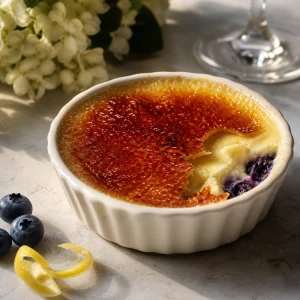
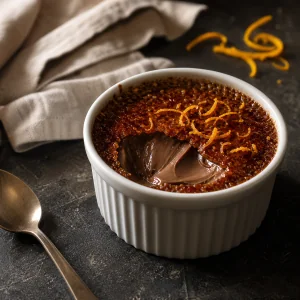
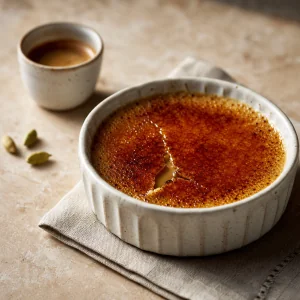
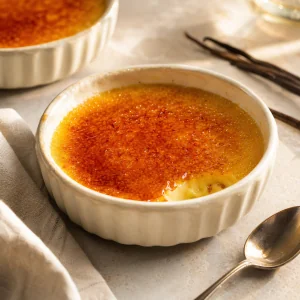
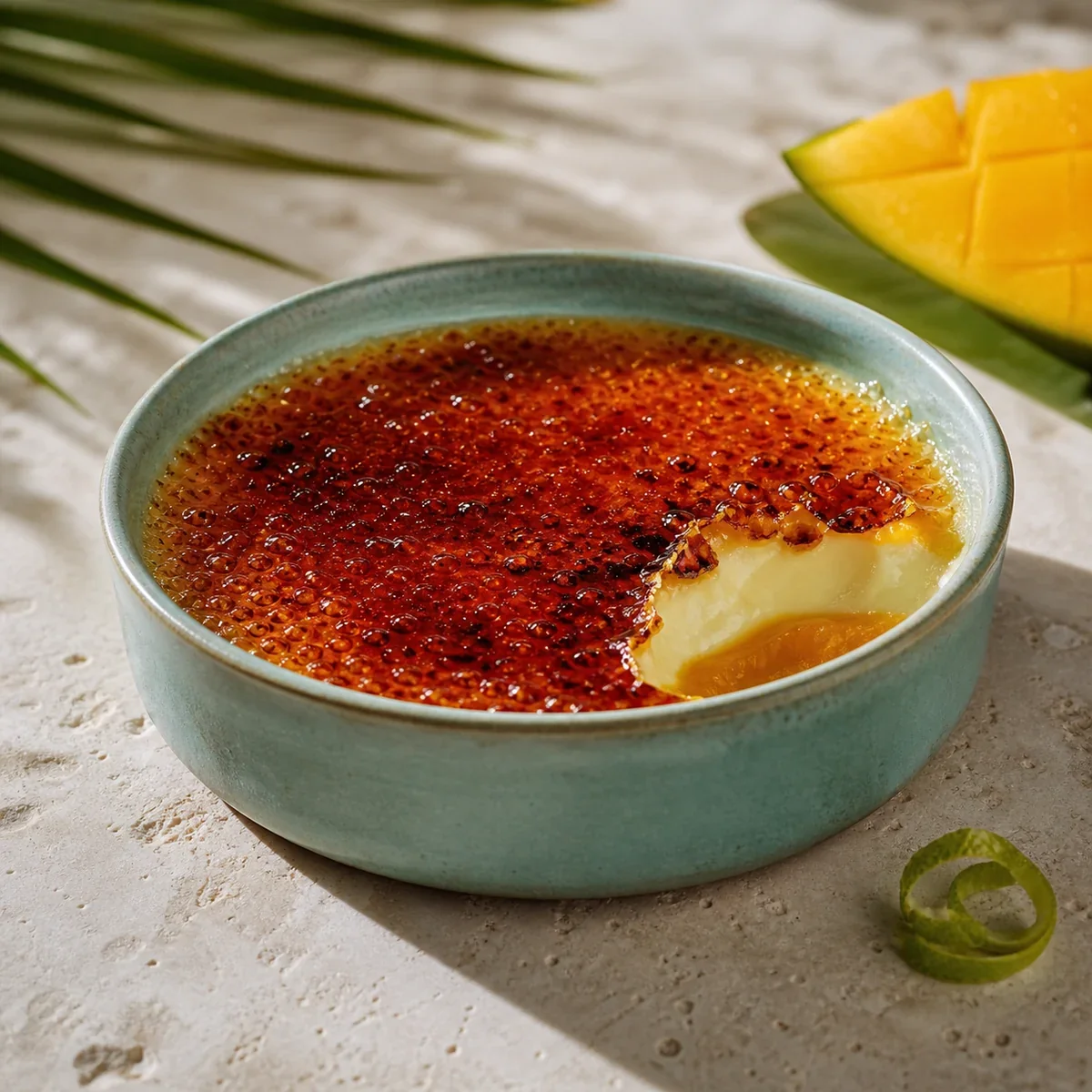
A silky dairy-free coconut custard rests over a concentrated mango layer beneath a thin, glassy caramel crust. Baked in individual ramekins, this restrained tropical crème brûlée makes an elegant summer dessert.
This dairy-free crème brûlée uses full-fat coconut milk and coconut cream for the richness usually supplied by heavy cream. The coconut flavor stays rounded rather than overpowering, allowing vanilla and ripe mango to share the spotlight.
Mango is cooked into a thick, bright layer before it goes into the ramekins. Removing its excess moisture protects the custard's texture and gives each spoonful a clean tropical finish instead of a watery fruit pocket.
A gentle water bath keeps the egg-rich coconut custard supple as it bakes. Pull the ramekins when the edges are set but the centers still tremble, then chill them thoroughly so the texture becomes smooth and sliceable beneath the crust.
Dry the chilled surfaces before adding a measured layer of sugar. A moving torch flame melts the sugar quickly into a thin amber sheet without warming the custard or scorching the coconut underneath.
Nutrition (per serving)
Directions
-
1
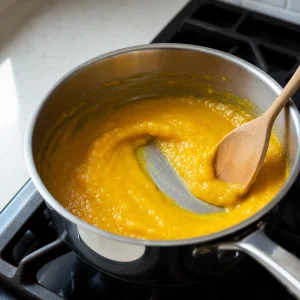
Blend the mango until completely smooth. Combine it with 2 tablespoons sugar and the lime juice in a small saucepan, then cook over medium heat for 10 to 12 minutes, stirring often, until very thick and reduced to about 3/4 cup.
-
2
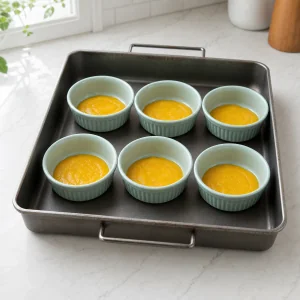
Divide the mango mixture among six 6-ounce ramekins and spread it into thin, even layers. Set the ramekins in a deep roasting pan and let the fruit cool completely.
-
3
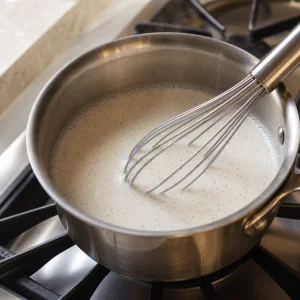
Heat the oven to 325°F. Whisk the coconut milk and coconut cream together in a saucepan until smooth, then add the vanilla. Warm over medium-low heat until steaming and tiny bubbles appear at the edge; remove from the heat.
-
4
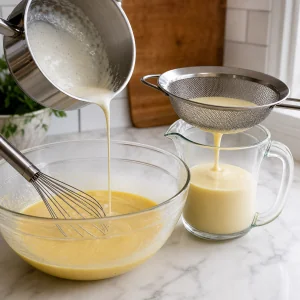
Whisk the egg yolks, 1/3 cup sugar, and salt in a large bowl just until smooth, without making the mixture foamy. Slowly whisk in the warm coconut mixture, then strain the custard through a fine-mesh sieve into a pitcher.
-
5
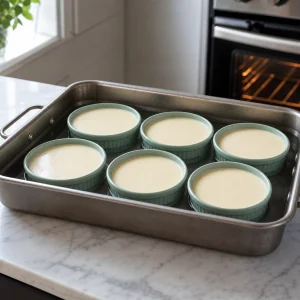
Divide the custard evenly among the ramekins. Pour hot water into the roasting pan until it reaches halfway up the ramekin sides, taking care not to splash the custards.
-
6
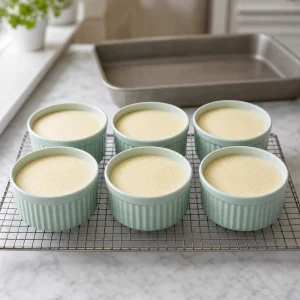
Bake for 38 to 43 minutes, until the edges are set and each center still jiggles gently when nudged. Transfer the ramekins to a rack, cool for 30 minutes, then cover and refrigerate for at least 4 hours or overnight.
-
7
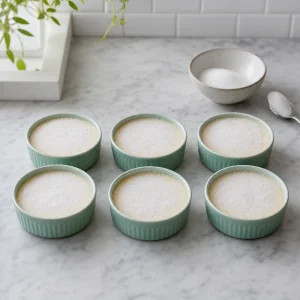
Just before serving, uncover the ramekins and blot away all surface moisture with a paper towel. Sprinkle 1 tablespoon sugar in a thin, even layer over each custard.
-
8
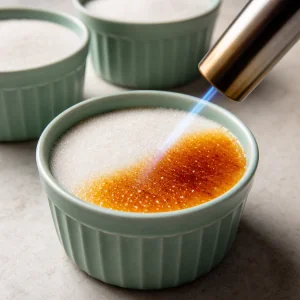
Caramelize each surface with a kitchen torch, keeping the flame moving until the sugar melts and turns deep amber. Let the crust harden for 2 minutes, then serve immediately.
Ingredients
- Ripe Mango Flesh:1 1/2 cups
- Granulated Sugar For Mango Layer:2 tablespoons
- Fresh Lime Juice:1 tablespoon
- Full-Fat Canned Coconut Milk:2 cups
- Unsweetened Coconut Cream:1/2 cup
- Vanilla Bean Paste:1 1/2 teaspoons
- Large Egg Yolks:7
- Granulated Sugar For Custard:1/3 cup
- Fine Sea Salt:1/8 teaspoon
- Granulated Sugar For Caramel Crust:6 tablespoons
Tips & Notes
- Choose full-fat canned coconut milk with no added sweetener, and whisk it well so the separated cream and liquid are fully combined.
- Cook the mango until a spoon drawn across the pan leaves a clear trail; a loose purée can soften the custard.
- For the cleanest caramel crust, torch the sugar only after the chilled custard surface has been thoroughly dried.