Filipino Pork Sinigang with Tamarind
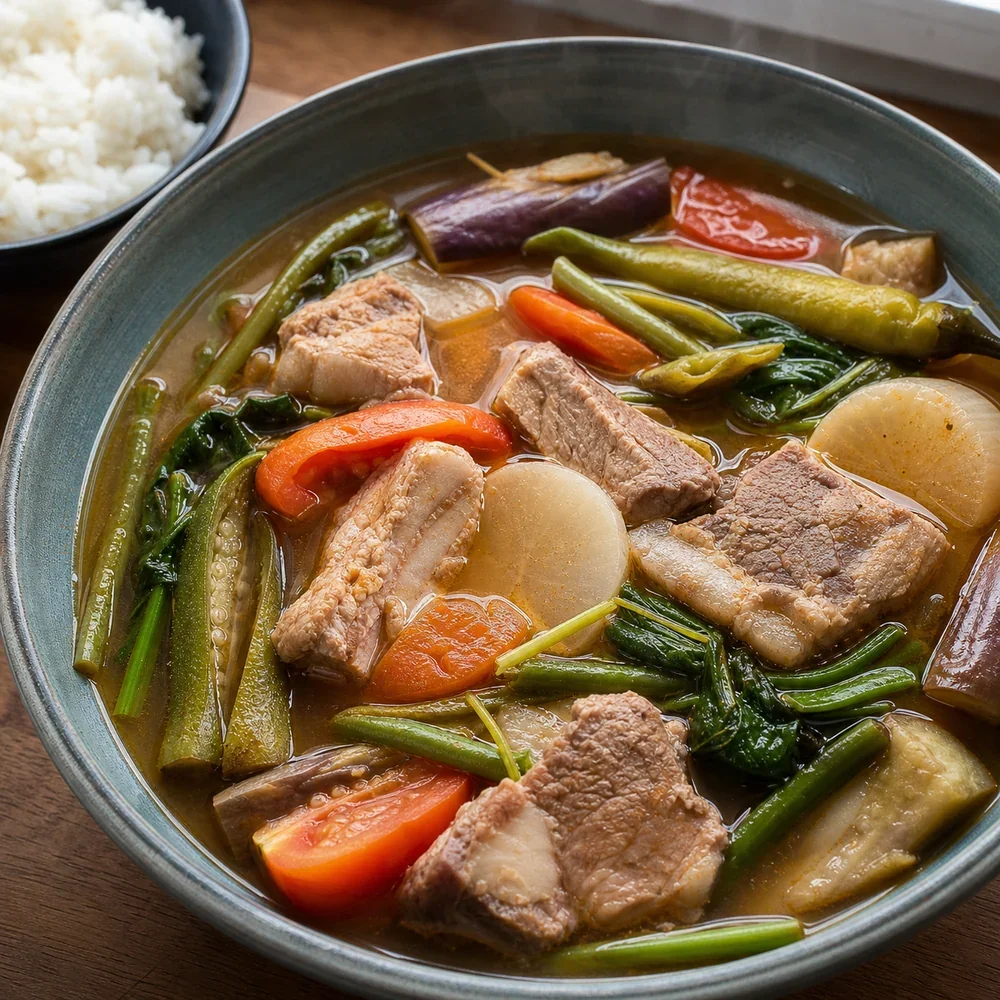

Pork sinigang is one of the most comforting sour soups in Filipino cooking, built around a broth that is sharp with tamarind but still deeply savory from pork, tomatoes, onion, and fish sauce. The goal is not a thin, one-note sourness; the broth should taste rounded, meaty, and bright enough to wake up a bowl of hot rice.
This version uses pork spare ribs because the bones enrich the broth while the meat turns tender during a steady simmer. Tamarind paste gives dependable acidity, and a little extra can be added at the end so the soup lands exactly where you like it: gently tangy or boldly sour.
The vegetables are added in stages so each one keeps its character. Daikon softens first and absorbs the broth, eggplant turns silky, long beans stay green and crisp-tender, and okra gives the soup a familiar body without making it heavy.
Serve sinigang as soon as the greens wilt, with steamed jasmine rice and extra fish sauce or sliced chilies on the side. Like many soups, it tastes even fuller the next day, though the vegetables are best when they are cooked just before serving.
Nutrition (per serving)
Directions
-
1
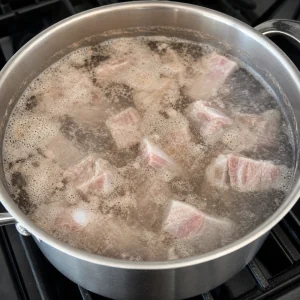
Put the pork ribs in a large pot, cover with cold water, bring to a boil, and boil for 3 minutes to release foam and impurities.
-
2
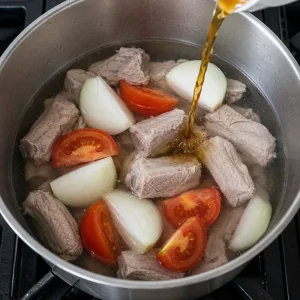
Drain the pork, rinse the pot, return the pork to the pot, and add the 8 cups water, onion, tomatoes, and fish sauce.
-
3
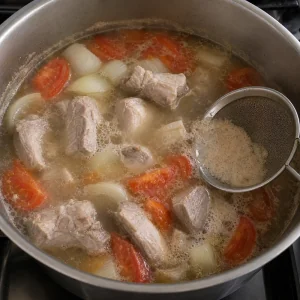
Bring to a gentle boil, then lower the heat, skim the surface, and simmer partly covered for 55 to 65 minutes, until the pork is tender but not falling apart.
-
4
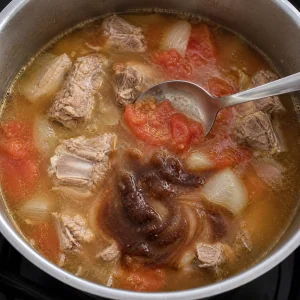
Mash a few softened tomato pieces against the side of the pot to deepen the broth, then stir in the tamarind paste until fully dissolved.
-
5
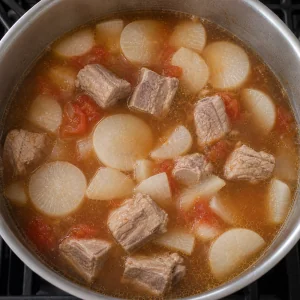
Add the daikon and simmer for 8 minutes, until the slices begin to turn translucent around the edges.
-
6
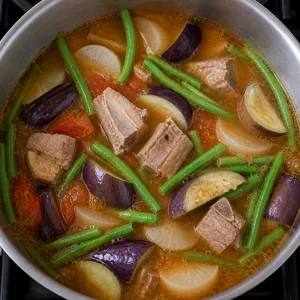
Add the eggplant and long beans and simmer for 5 minutes, keeping the broth at a steady but gentle bubble.
-
7
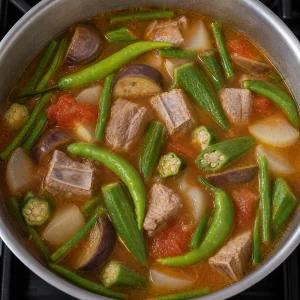
Stir in the okra and green chilies and cook for 3 to 4 minutes, until the okra is bright green and just tender.
-
8
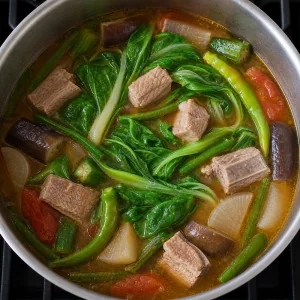
Add the bok choy or water spinach and cook for 1 to 2 minutes, only until the leaves wilt.
-
9
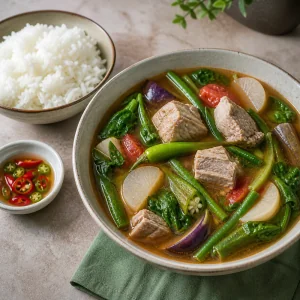
Taste the broth and adjust with more fish sauce, tamarind paste, or salt, then serve hot with steamed jasmine rice.
Ingredients
- Pork spare ribs, cut into 2-inch pieces:2 1/2 lb
- Water:8 cups
- Yellow onion, quartered:1
- Roma tomatoes, quartered:3
- Fish sauce:3 tbsp
- Tamarind paste:1/3 cup
- Daikon radish, peeled and sliced:10 oz
- Asian eggplant, cut into chunks:8 oz
- Long beans, cut into 3-inch pieces:6 oz
- Okra, trimmed:6 oz
- Baby bok choy or water spinach:5 oz
- Green finger chilies:2
- Kosher salt:as needed
- Steamed jasmine rice, for serving:6 cups
Tips & Notes
- For a cleaner broth, parboil the pork first and rinse away the gray foam before the main simmer.
- If using a very concentrated tamarind paste, start with half the amount and add more after tasting.
- Add delicate greens at the very end so they stay vivid and do not turn muddy in the hot broth.
- Leftovers reheat well, but add a handful of fresh greens after reheating if you want the soup to taste newly made.