Osterzopf — German Easter Braided Sweet Bread Recipe
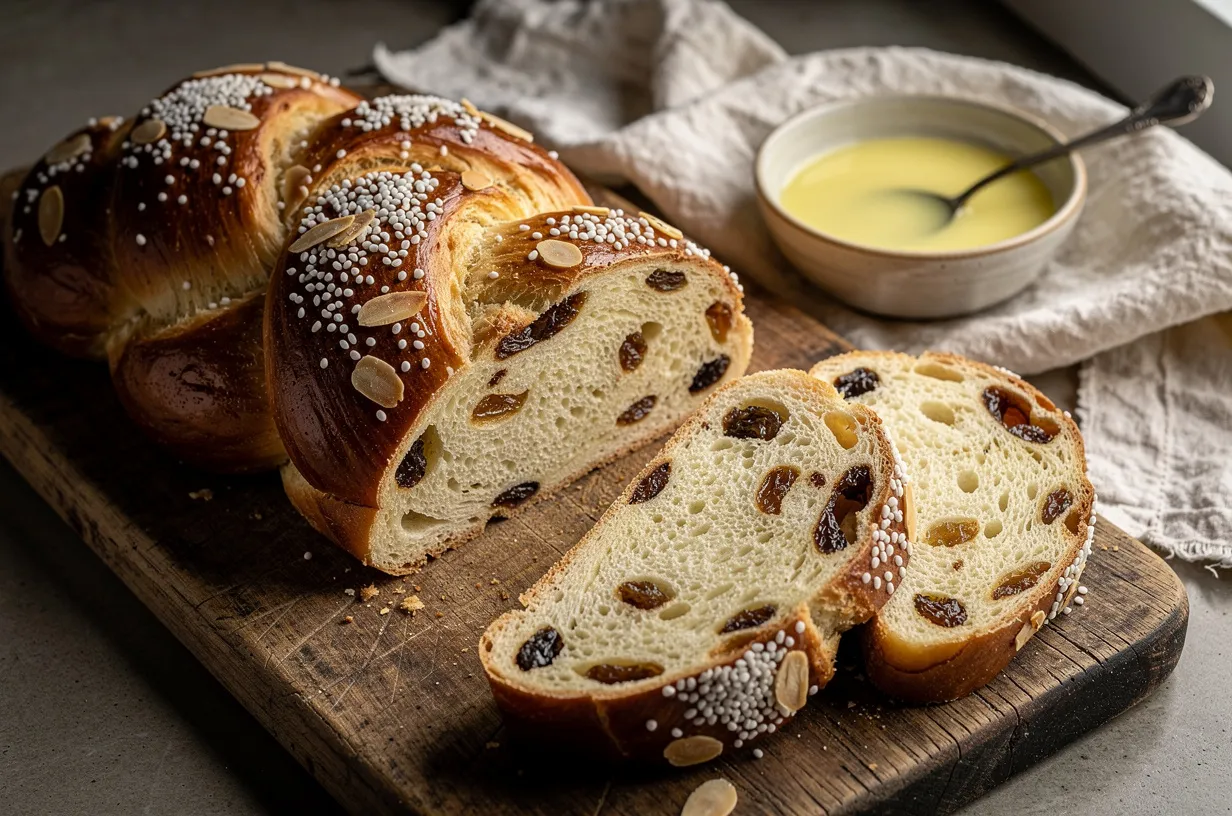

Osterzopf
Tender braided sweet bread flavored with vanilla, lemon, and raisins—perfect for Easter brunch.
Osterzopf is a joyous, old-fashioned German Easter braid — a slightly sweet, egg-enriched bread scented with vanilla and lemon, often studded with raisins and finished with pearl sugar and almonds. It’s the kind of loaf that fills the kitchen with warm, comforting aromas and makes any holiday table feel special.
This recipe keeps things approachable: a soft, kneaded dough, two brief rises, and a simple three-strand braid. Whether you’re baking for a festive brunch or trying a new weekend project, the result is a shiny, golden braid that slices beautifully and tastes of buttery vanilla and bright lemon.
Nutrition (per serving)
Directions
-
1

Place raisins in a small bowl and cover with rum or warm water; set aside to plump while you mix the dough.
-
2

Warm the milk to about 105–115°F. In a large bowl combine warm milk, yeast, and 1 tsp sugar; let sit 5–10 minutes until foamy.
-
3

Whisk in remaining sugar, melted butter, eggs, vanilla, and lemon zest until smooth.
-
4

Stir in 2 cups of flour and the salt to form a shaggy dough; add remaining flour 1/4 cup at a time until a soft, slightly tacky dough forms.
-
5
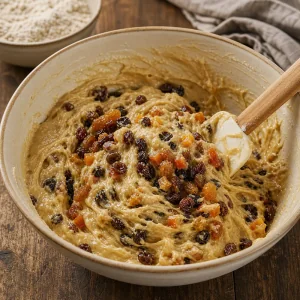
Turn dough onto a lightly floured surface and knead 6–8 minutes until smooth and elastic (or use a stand mixer with dough hook on medium for 5 minutes). Fold drained raisins into the dough during the last minute of kneading.
-
6
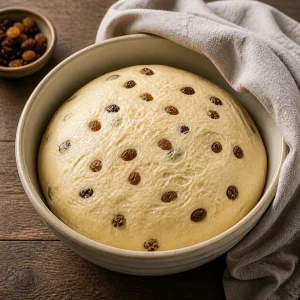
Place dough in a lightly greased bowl, cover with plastic wrap or a clean towel, and let rise in a warm spot until doubled, about 60 minutes.
-
7

Punch down dough and divide into three equal pieces. Roll each into a rope about 16 inches long, tapering the ends slightly.
-
8
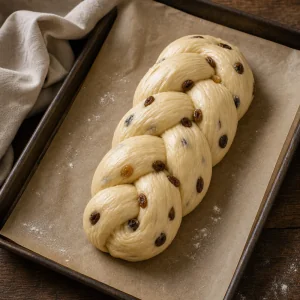
Pinch the tops of the three ropes together and braid tightly to the bottom, then pinch the ends to seal and tuck under to create a neat loaf. Transfer to a parchment-lined baking sheet.
-
9

Cover loosely and let the braid rise until puffy, about 30 minutes. Preheat oven to 350°F while it rises.
-
10

Whisk the reserved egg for an egg wash and brush it over the braid. Sprinkle with sliced almonds and pearl sugar if using.
-
11

Bake for 25–30 minutes until deep golden and hollow-sounding when tapped; if the top browns too quickly, tent loosely with foil for the last 10 minutes.
-
12

Cool on a wire rack. Optionally, whisk together 1/2 cup powdered sugar with 1 tsp lemon juice and 1/2 tsp milk to make a thin lemon glaze and drizzle over the cooled braid before serving.
Ingredients
- All-purpose flour:4 cups
- Warm whole milk (about 110°F):1 cup
- Active dry yeast:2.25 tsp
- Granulated sugar:1/3 cup
- Salt:1 tsp
- Unsalted butter, melted:3 tbsp
- Large eggs:2 pieces
- Egg (for egg wash):1 piece
- Vanilla extract:1 tsp
- Lemon zest (from 1 lemon):1 piece
- Raisins, soaked and drained:3/4 cup
- Rum or warm water (for soaking raisins):1 tbsp
- Sliced almonds:2 tbsp
- Pearl sugar (optional):2 tbsp
Tips & Notes
- Keep liquids warm — yeast likes around 105–115°F. Too hot will kill it, too cool will slow the rise.
- If your dough feels sticky, resist adding too much flour; lightly oiled hands or a bench scraper help shape it without over-flouring.
- For an even braid, roll ropes to similar lengths and keep tension steady while braiding.
- Make the braid the day before and gently reheat slices in a low oven or toaster for fresh-from-the-oven warmth.