Traditional Cypriot Galaktoboureko with Citrus Syrup
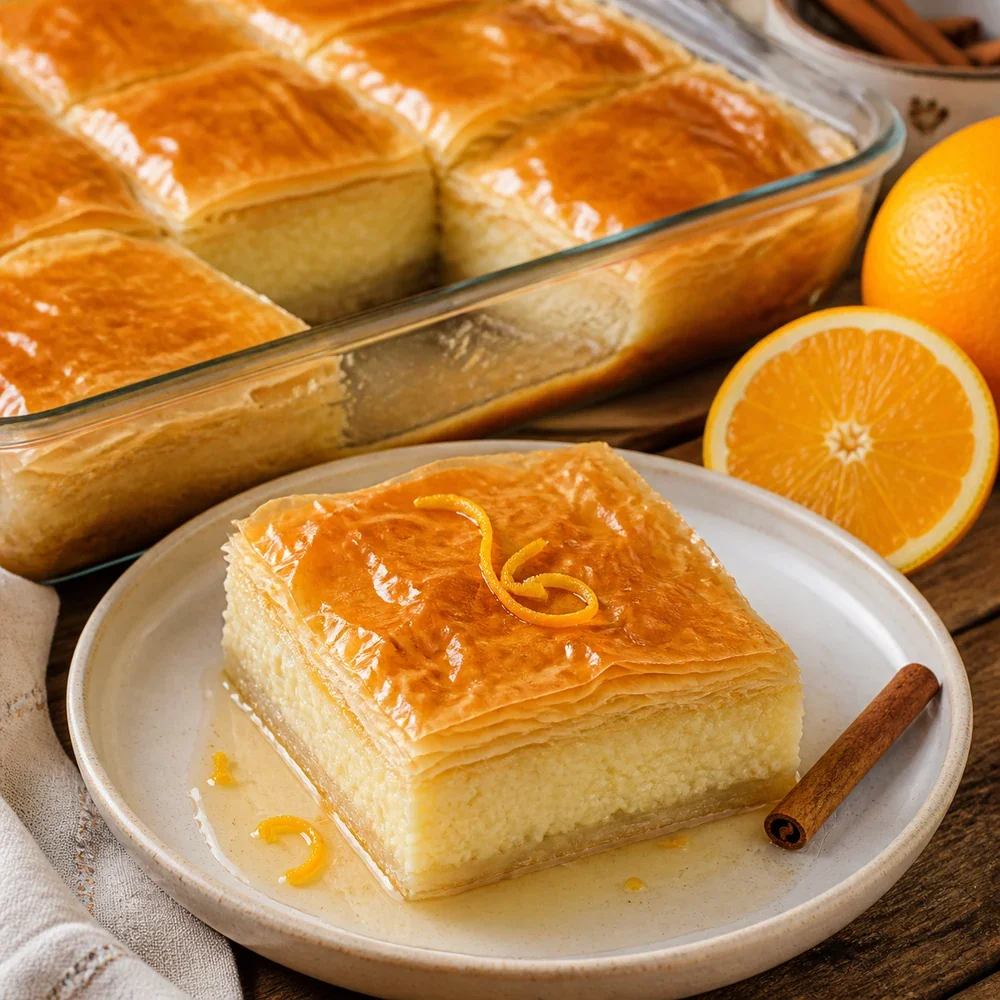

Galaktoboureko is the undisputed crown jewel of Cypriot desserts, a dish that transforms humble pantry staples into something truly magical. I remember the intoxicating scent of citrus and melting butter filling my grandmother's kitchen every time a celebration was near. It is more than just a pastry; it is a labor of love that rewards you with the most incredible combination of textures and Mediterranean flavors.
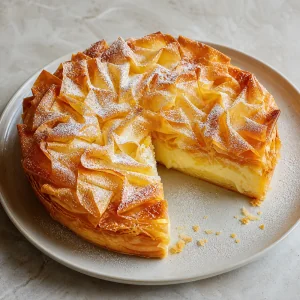
The secret to a perfect Galaktoboureko lies in the contrast between the shatteringly crisp layers of buttered phyllo and the velvety, dense semolina custard hidden inside. Once the hot pastry is drenched in a cold, aromatic citrus syrup, it absorbs all those bright notes of lemon and orange, creating a decadent treat that is best enjoyed slightly warm with a strong cup of Cypriot coffee.
Nutrition (per serving)
Directions
-
1

Start by making the syrup: Combine 2 cups sugar, water, orange peel, and cinnamon stick in a saucepan. Bring to a boil, then simmer for 10 minutes. Stir in lemon juice and let it cool completely.
-
2
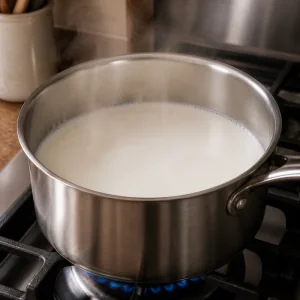
In a large saucepan, warm the milk over medium heat until it begins to steam.
-
3
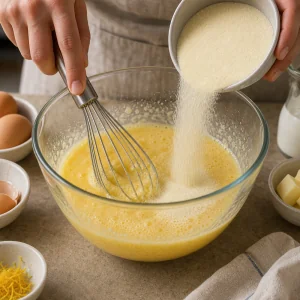
In a bowl, whisk the eggs and 1/2 cup sugar until pale. Gradually whisk in the semolina.
-
4
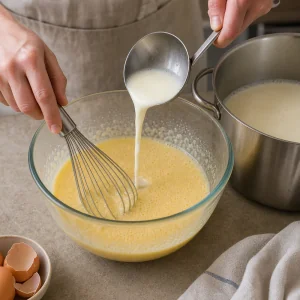
Slowly temper the eggs by adding a ladle of warm milk to the egg mixture while whisking constantly. Pour the mixture back into the saucepan with the remaining milk.
-
5
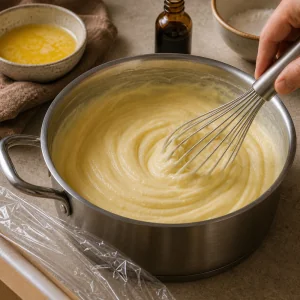
Cook the custard over medium-low heat, whisking continuously until it thickens to a pudding consistency. Remove from heat, stir in vanilla and 2 tablespoons of the melted butter, then cover with plastic wrap directly on the surface to prevent a skin.
-
6
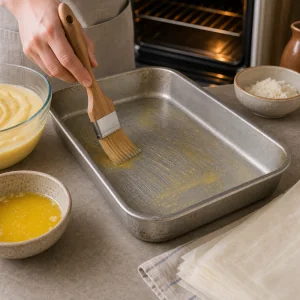
Preheat your oven to 350°F and grease a 9x13 inch baking pan with melted butter.
-
7
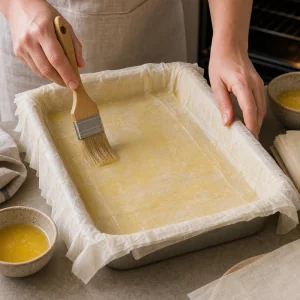
Layer half of the phyllo sheets in the pan, brushing each individual sheet generously with melted butter. Let the edges hang over the sides.
-
8
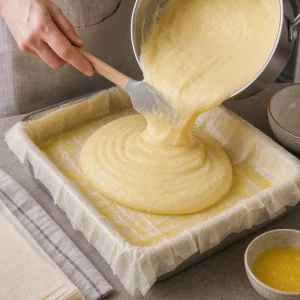
Pour the custard over the phyllo and smooth it out. Fold the overhanging edges of phyllo over the custard.
-
9
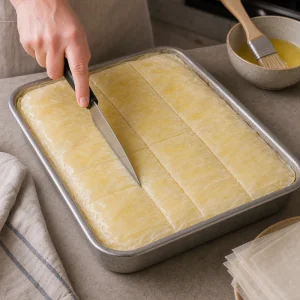
Layer the remaining phyllo sheets on top, brushing each with butter. Tuck the edges into the sides of the pan. Score the top few layers of phyllo into rectangles with a sharp knife.
-
10
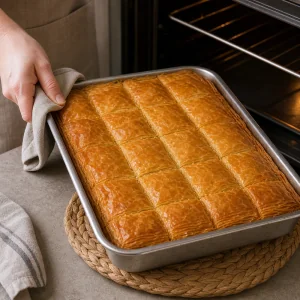
Bake for 45-50 minutes until the pastry is deeply golden and crisp.
-
11
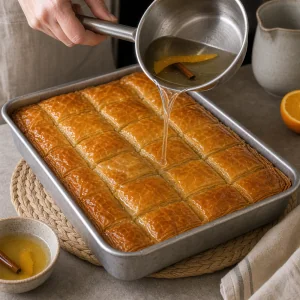
Immediately pour the cold syrup over the hot pastry. Allow it to sit for at least 2 hours to absorb the syrup before serving.
Ingredients
- Phyllo dough (thawed):1 lb
- Unsalted butter, melted:1 cup
- Whole milk:4 cups
- Fine semolina:¾ cup
- Granulated sugar (for custard):½ cup
- Eggs:4 pieces
- Vanilla extract:1 tsp
- Granulated sugar (for syrup):2 cups
- Water:1.5 cups
- Lemon juice:1 tbsp
- Orange peel strip:1 piece
- Cinnamon stick:1 piece
Tips & Notes
- Always pour cold syrup over hot pastry (or vice versa) to ensure the phyllo stays crisp and doesn't get soggy.
- Keep your phyllo dough covered with a damp kitchen towel while working so it doesn't dry out and crack.
- Using fine semolina rather than coarse provides the smoothest, most traditional custard texture.