Homemade Fermented Vegetables to Restore Gut Health
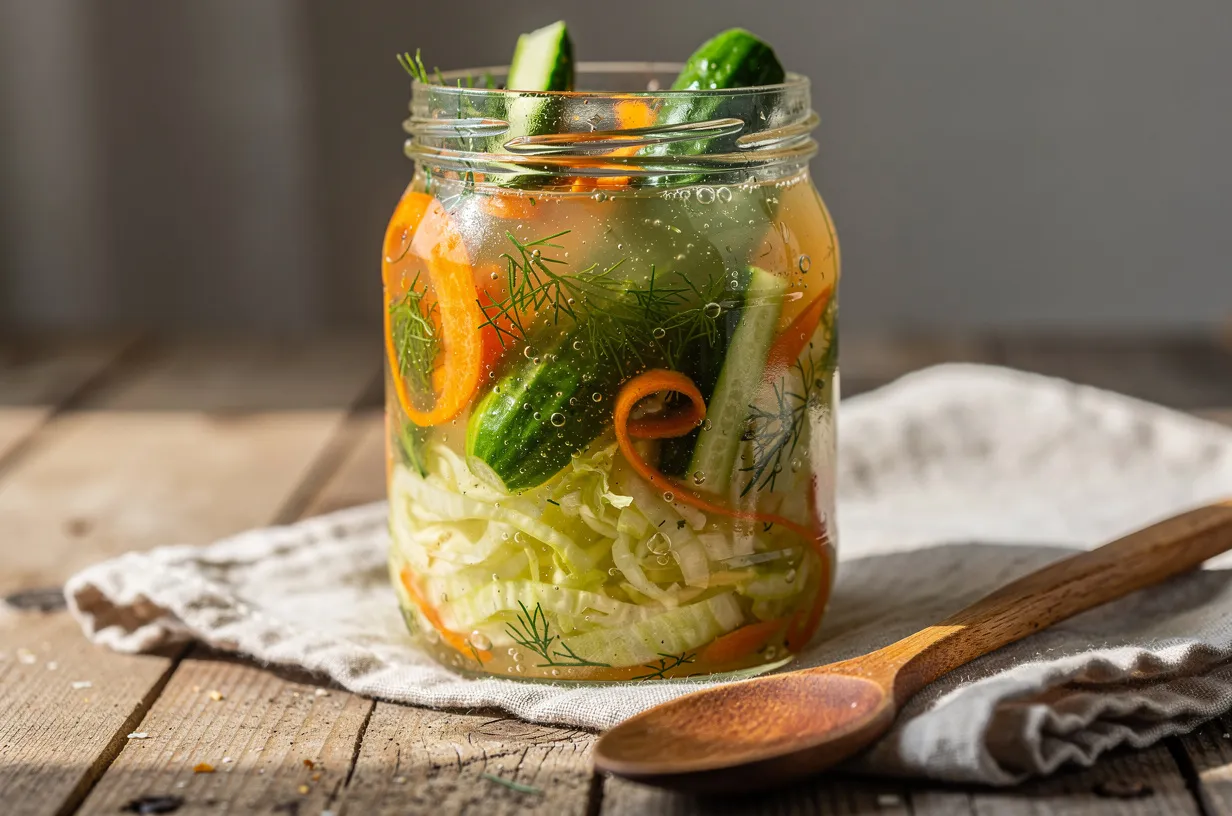

Fermented Veg
Easy, probiotic-rich fermented vegetables to support a healthy microbiome.
Fermenting vegetables at home is one of the simplest, most rewarding ways to add live probiotics to your diet — and it’s surprisingly forgiving. This recipe uses everyday produce (cabbage, carrots, cucumber and optional mixed veggies) plus a little salt and time to coax out bright, tangy flavors that nourish your gut microbiome. I love how the crunchy, sour results perk up salads, bowls, sandwiches or a simple spoonful with roasted vegetables.
You’ll find two easy approaches here: a dry-salt pack (great for sauerkraut-style shredded cabbage) and a brine option (better for cucumbers and mixed spears). Either way, the goal is the same — keep vegetables submerged in their liquid, let beneficial bacteria do the work at room temperature for a few days, then move to the fridge to slow fermentation.
Nutrition (per serving)
Directions
-
1
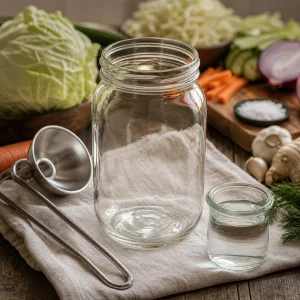
Sterilize a clean wide-mouth 1-quart jar and any utensils you'll use. Keep a small cup or jar to use as a weight to press vegetables down.
-
2
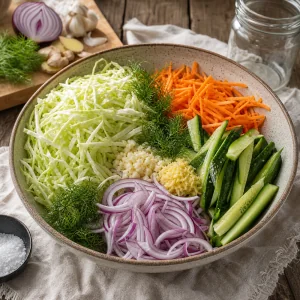
Prepare vegetables: thinly slice cabbage, julienne carrots, cut cucumber into spears, thinly slice onion, mince garlic and grate ginger. Combine all vegetables and aromatics in a large mixing bowl.
-
3
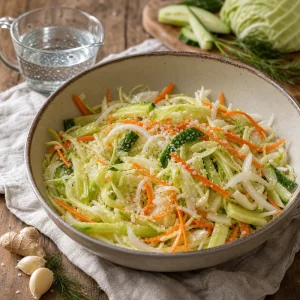
Choose your method: Dry-salt pack (crunchier kraut): sprinkle 2 tbsp sea salt over the vegetables and massage firmly for 5–10 minutes until they begin to release liquid. Brine option (better for cucumbers/mixed spears): dissolve 1 tbsp sea salt in 2 cups filtered water and set aside.
-
4
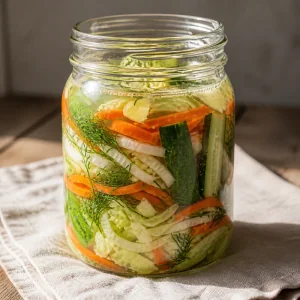
If using dry-salt pack, pack the vegetables tightly into the jar, pressing down to release and submerge them in their own juices. If using brine, pack vegetables into the jar and pour the prepared brine over them, leaving about 1–2 inches headspace.
-
5
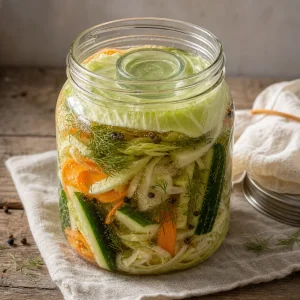
Add optional peppercorns or herbs, then place a piece of clean cabbage leaf or a fermentation weight on top to keep all solids fully submerged beneath the brine. Cover the jar with a loose lid, fermentation airlock, or a clean cloth secured with a rubber band to keep dust and insects out while allowing gas to escape.
-
6
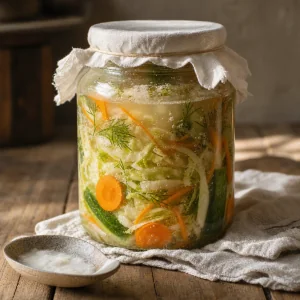
Leave the jar at room temperature (ideally 60–75°F) out of direct sunlight. Fermentation time varies: start tasting after 3 days. Expect 3–10 days depending on temperature and your preferred tang. Skim any white, milky scum (kahm yeast) off the surface — this is harmless; discard it.
-
7
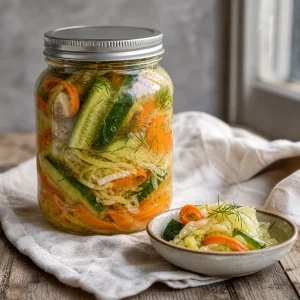
When the vegetables are pleasantly tangy and slightly effervescent, tighten the lid and move the jar to the refrigerator to slow fermentation. Keep refrigerated; flavors will continue to develop slowly and will keep for several weeks to months.
Ingredients
- Green cabbage, thinly sliced:1 lb
- Carrots, peeled and julienned:2 pieces
- English cucumber, cut into spears:1 piece
- Red onion, thinly sliced:1/2 piece
- Garlic cloves, minced:3 pieces
- Fresh ginger, grated:1 tbsp
- Sea salt (non-iodized):2 tbsp
- Filtered water (for brine option):2 cups
- Whole peppercorns or caraway seeds (optional):1 tsp
- Fresh dill or fresh herbs (optional):2 tbsp
- Wide-mouth 1-quart glass jar (sterilized):1 piece
Tips & Notes
- Use non-iodized salt (sea salt or kosher salt) — iodine can inhibit fermentation.
- Keep vegetables fully submerged to prevent mold; use a small jar filled with water or a fermentation weight to press them down.
- If you see fuzzy colored mold, discard and start over. White or tan kahm yeast is generally harmless and can be skimmed off.
- Warmer rooms speed fermentation; cooler rooms slow it. Taste daily after day 3 to find your preferred tang.
- Mix and match vegetables: napa cabbage, radish, bell pepper, or green beans all work. Cut thicker veggies into smaller pieces for even fermenting.
- Save a bit of the brine as a starter for future batches to jump-start fermentation.