Homemade Traditional Tangy Feta Cheese in Brine


Homestyle Feta
Tangy, crumbly, and wonderfully salty homemade feta cheese that beats any store-bought version.
There is something incredibly rewarding about making your own cheese at home, and feta is the perfect place to start your cheesemaking journey. This homestyle version captures that signature Mediterranean tang and crumbly texture that pairs beautifully with fresh garden salads, savory pastries, or simply drizzled with high-quality olive oil and a pinch of dried oregano.
While the process requires a bit of patience for the draining and brining stages, the actual active work is quite simple and very satisfying. Using fresh goat or sheep's milk provides the most authentic, sharp flavor, but you can also use high-quality whole cow's milk for a milder, creamier result that still far surpasses the pre-packaged varieties found at the grocery store.
Nutrition (per serving)
Directions
-
1
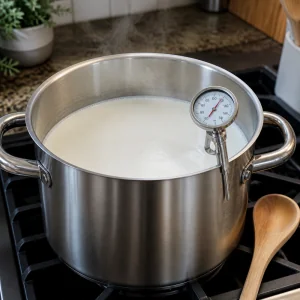
In a large stainless steel pot, slowly heat the milk over low heat until it reaches 86°F. Stir occasionally to prevent scorching.
-
2

Sprinkle the mesophilic culture over the milk surface and let it rehydrate for 2 minutes, then stir in with an upward and downward motion. Cover and let the milk ripen for 1 hour at room temperature.
-
3
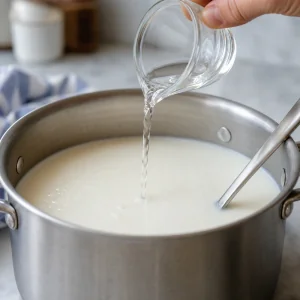
Dilute the liquid rennet in 1/4 cup of cool water. Pour it into the milk and stir gently for 1 minute. Cover and let sit undisturbed for 1 hour until a 'clean break' is achieved (the curd should split cleanly when poked with a knife).
-
4
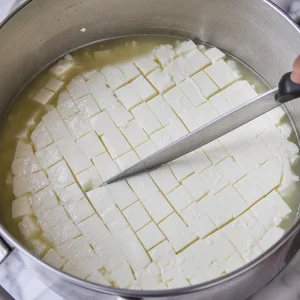
Cut the curd into 1/2-inch cubes using a long knife. Let the curds rest for 10 minutes to firm up.
-
5
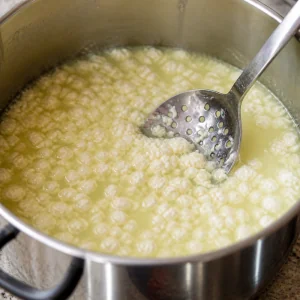
Gently stir the curds for 20 minutes to help them release whey. The curds will slightly shrink and become more rounded.
-
6
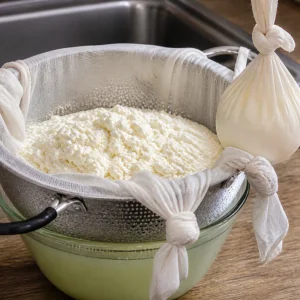
Line a colander with a large piece of sterilized cheesecloth. Carefully pour the curds into the colander, tie the corners of the cloth together, and hang the bag to drain for 12 to 24 hours at room temperature.
-
7

Remove the cheese from the cloth. It should be a firm block. Cut it into 1-inch thick slices or cubes.
-
8
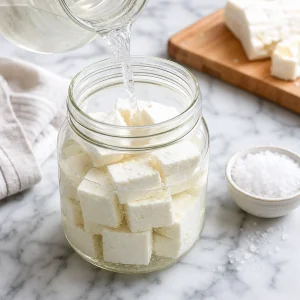
Prepare the brine by dissolving the sea salt into 4 cups of water. Place the cheese blocks into a clean glass jar and pour the brine over them until fully submerged.
-
9
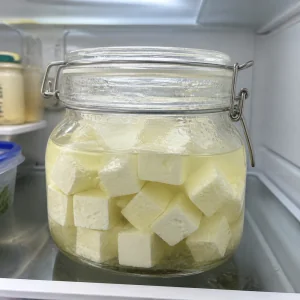
Age the feta in the refrigerator for at least 3 days before eating to allow the flavor to develop and the texture to firm up.
Ingredients
- Whole goat's milk (or sheep's milk):1 gallon
- Mesophilic starter culture (or plain yogurt):1/8 tsp
- Liquid rennet:1/4 tsp
- Cool, non-chlorinated water:1/4 cup
- Non-iodized sea salt (for brining):1/2 cup
- Water (for brine):4 cups
Tips & Notes
- Always use non-chlorinated water, as chlorine can interfere with the rennet and cultures.
- If the brine is too salty for your taste, you can soak the feta in plain milk or water for an hour before serving.
- Store the cheese fully submerged in the brine; it will keep in the refrigerator for several weeks.