Egyptian Sourdough Pocket Bread (Aish Baladi Style)
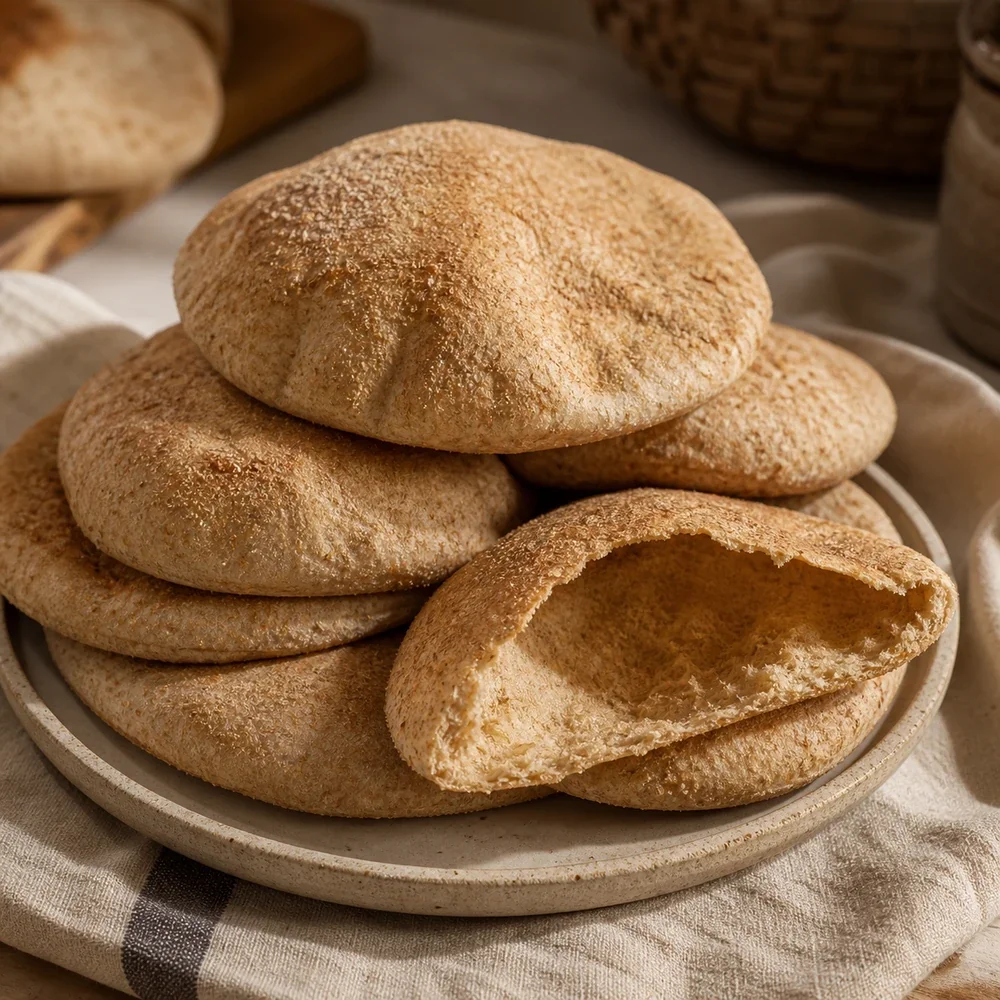

Sourdough Aish Baladi
Authentic Egyptian whole-wheat flatbread with a sourdough twist. Perfect for stuffing or dipping.
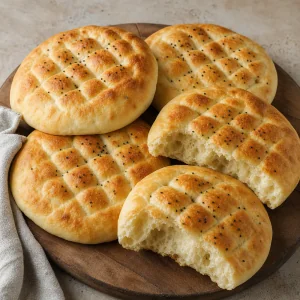
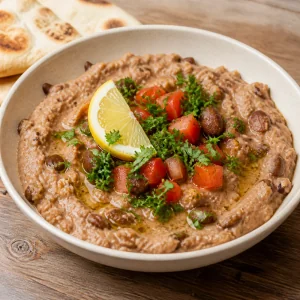
In Egypt, bread isn't just a side dish; it's known as 'Aish,' which literally translates to 'life.' This sourdough version of the traditional Aish Baladi brings a tangy, complex depth to the ancient whole-wheat flatbread. Using a natural starter instead of commercial yeast rewards you with a more extensible dough and a crust that is beautifully charred yet soft. It is the ultimate vessel for scooping up creamy hummus or stuffing with hot, crispy falafel.
The secret to that iconic 'pocket' lies in the combination of a high-hydration dough and a screaming-hot oven. When the flat circles hit the preheated stone, the moisture inside turns to steam instantly, forcing the dough to puff up like a balloon. Dusting the bottom with wheat bran adds that characteristic nutty grit and prevents sticking, ensuring every loaf comes out looking like it was pulled straight from a Cairo bakery. Get your oven as hot as it can go, and prepare for the most satisfying bake of your week.
Nutrition (per serving)
Directions
-
1
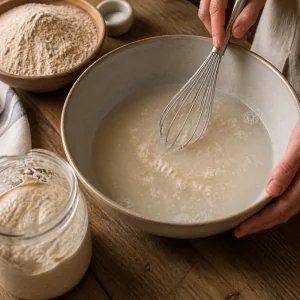
In a large mixing bowl, whisk together the active sourdough starter and warm water until the starter is mostly dissolved.
-
2
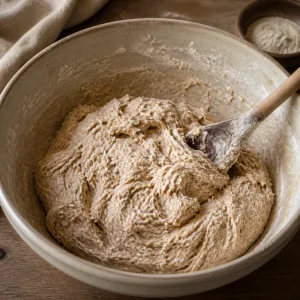
Add the whole wheat flour, bread flour, and salt. Mix by hand or with a sturdy spoon until a shaggy dough forms and no dry flour remains.
-
3
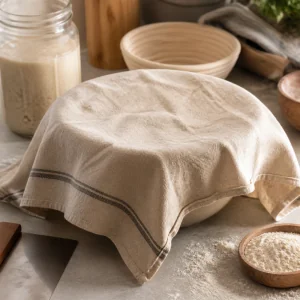
Cover the bowl with a damp cloth and let the dough rest (autolyse) for 30 minutes.
-
4
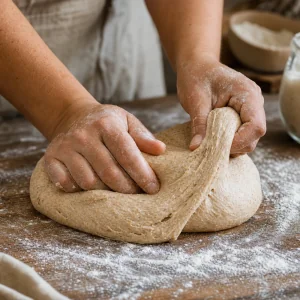
Knead the dough on a lightly floured surface for about 8-10 minutes until it becomes smooth and slightly elastic. It will still be a bit tacky due to the whole wheat content.
-
5
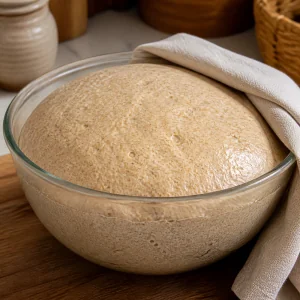
Place the dough in a lightly oiled bowl, cover, and let it rise in a warm spot (bulk fermentation) for 4 to 6 hours, or until doubled in size. You can also let it rise in the fridge overnight for better flavor.
-
6
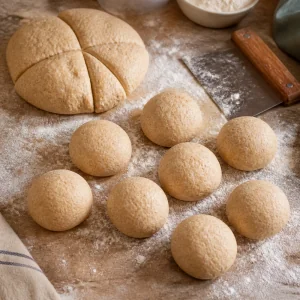
Gently tip the dough onto a floured surface and divide it into 8 equal pieces. Roll each piece into a smooth ball.
-
7
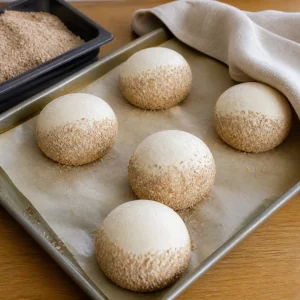
Spread the wheat bran on a small tray. Roll each dough ball in the bran to coat the bottom, then place them on a parchment-lined tray. Cover and let rest for 30-45 minutes.
-
8
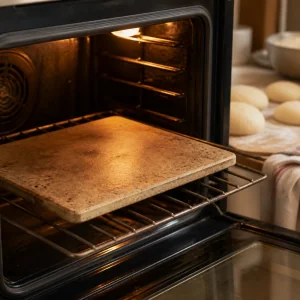
While the dough rests, place a baking stone or an inverted baking sheet in the oven and preheat to 500°F (or your oven's highest setting).
-
9
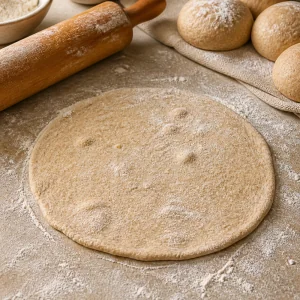
On a floured surface, roll each ball into a circle about 1/4 inch thick and 6-7 inches in diameter. Let the rolled circles rest for another 10 minutes.
-
10
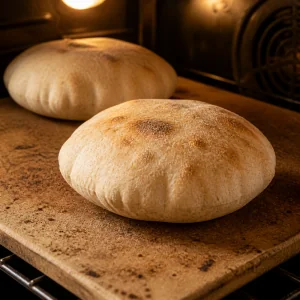
Carefully place 1 or 2 dough circles directly onto the hot baking stone. Bake for 2-4 minutes until they puff up completely and slightly brown on top. Do not overbake or they will become crisp like crackers.
-
11
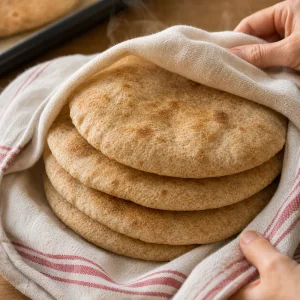
Remove from the oven and immediately wrap in a clean kitchen towel to keep them soft and pliable. Repeat with the remaining dough.
Ingredients
- Active sourdough starter (100% hydration):1 cup
- Warm water:1.5 cups
- Whole wheat flour:2 cups
- Bread flour (plus extra for dusting):1.5 cups
- Fine sea salt:2 tsp
- Wheat bran:0.5 cup
Tips & Notes
- If your bread doesn't puff, your oven might not be hot enough. Ensure the baking stone has preheated for at least 45 minutes.
- Store the bread in an airtight plastic bag once cooled to keep it soft; it freezes beautifully for up to 3 months.
- For a more rustic flavor, increase the ratio of whole wheat flour, but you may need to add a splash more water.
- Try not to poke or tear the dough when rolling it out, as any holes will prevent the steam from inflating the pocket.