Japanese Nikujaga Beef and Potato Stew
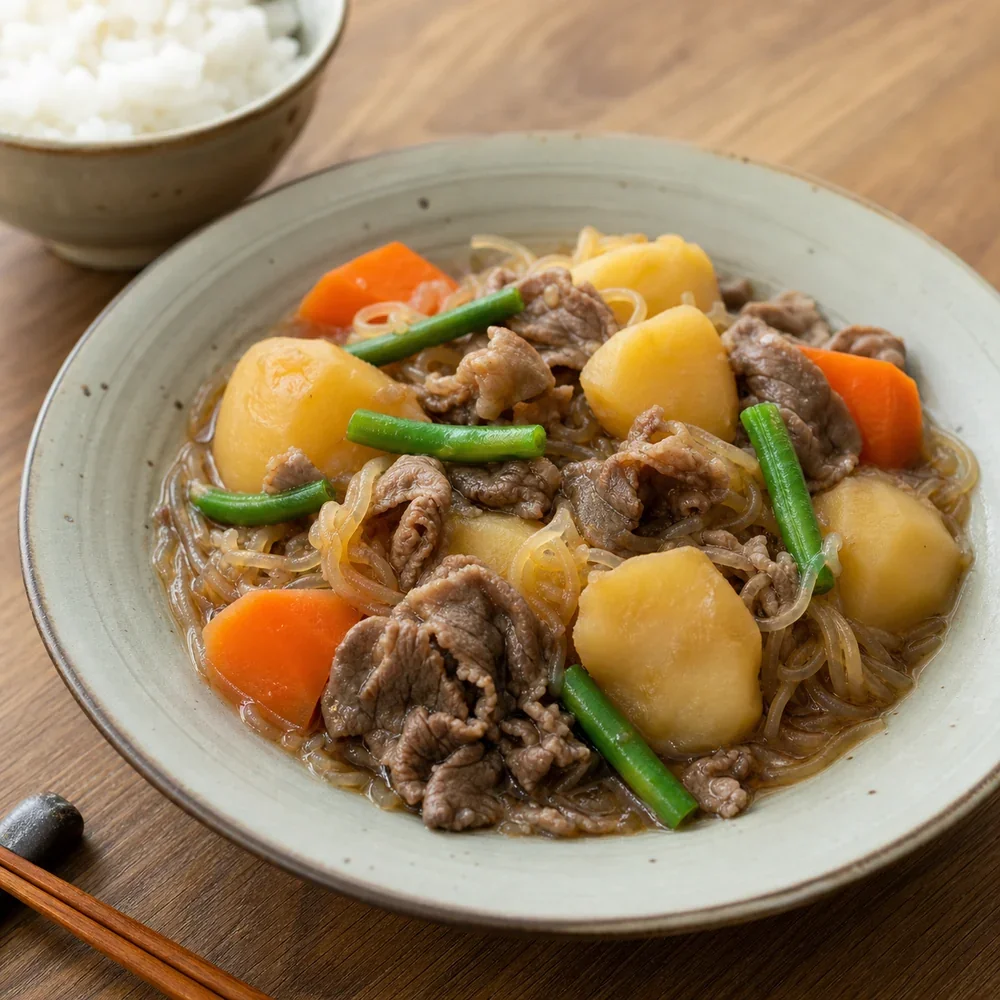

Nikujaga Beef Stew
A homestyle Japanese simmered stew with thinly sliced beef, potatoes, onions, carrots, and shirataki noodles in a lightly sweet soy-dashi broth.
Nikujaga is the kind of Japanese home cooking that depends on balance more than complexity. Thin slices of beef season the pot quickly, while potatoes, onions, and carrots simmer until they absorb a gentle broth of dashi, soy sauce, mirin, and sake.
The dish should taste savory first, then lightly sweet, with the potatoes tender but not falling apart. Cutting the potatoes into large pieces helps them hold their shape, and giving the onions a brief saute before simmering builds sweetness without making the broth heavy.
Shirataki noodles are traditional in many versions because they soak up the broth and add a pleasant springy texture. Rinsing and briefly boiling them first removes their packaged aroma and keeps the finished stew clean-tasting.
Serve nikujaga in shallow bowls with steamed rice and something crisp or pickled on the side. Like many simmered dishes, it tastes even deeper after resting for a short time, so it is a good make-ahead dinner for a quiet weeknight.
Nutrition (per serving)
Directions
-
1
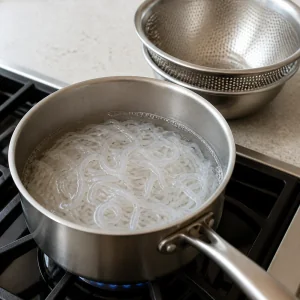
Bring a small saucepan of water to a boil, add the rinsed shirataki noodles, and boil for 2 minutes. Drain well and cut the noodles into shorter lengths.
-
2
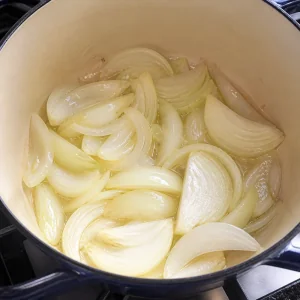
Heat the oil in a wide, heavy pot over medium heat. Add the onion wedges and cook for 3 minutes, stirring occasionally, until the edges begin to turn translucent.
-
3
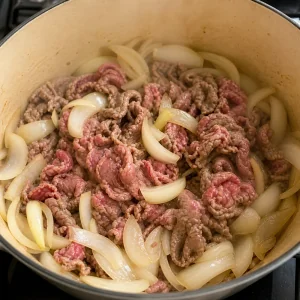
Add the beef in loose layers and cook just until most of the slices lose their raw color, about 2 minutes. Do not brown the beef hard.
-
4
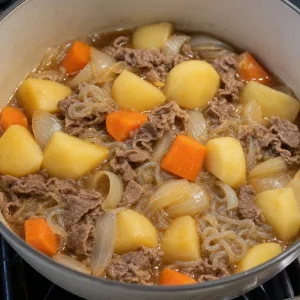
Add the potatoes, carrot, and shirataki noodles, then pour in the dashi, soy sauce, mirin, sake, and sugar. Gently stir so the vegetables are coated in the broth.
-
5
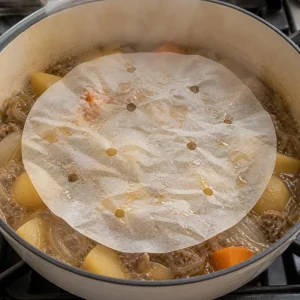
Bring the pot to a steady simmer and skim off any foam from the surface. Lower the heat to medium-low, cover with a drop lid or parchment round, and simmer for 20 minutes.
-
6
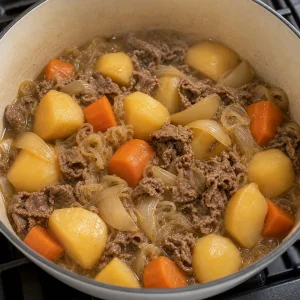
Turn the potatoes and carrots gently, then continue simmering uncovered for 8 to 10 minutes, until the potatoes are tender when pierced and the broth has reduced slightly.
-
7
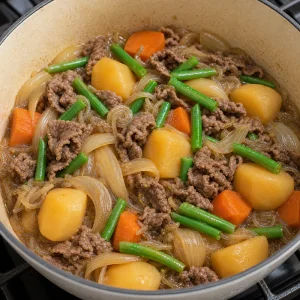
Add the green beans and simmer for 3 to 4 minutes, just until bright green and tender-crisp.
-
8
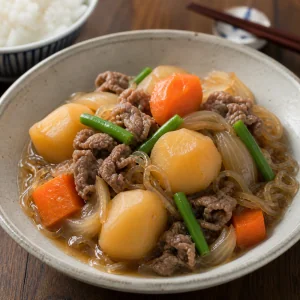
Remove the pot from the heat and let the stew rest for 10 minutes so the potatoes absorb more broth. Serve warm in shallow bowls with some of the simmering liquid spooned over each portion.
Ingredients
- Thinly Sliced Beef Chuck or Ribeye:12 oz
- Yukon Gold Potatoes, peeled and cut into large chunks:1 1/2 lb
- Yellow Onion, cut into wedges:1 large
- Carrot, cut into rolling chunks:1 large
- Shirataki Noodles, rinsed and drained:7 oz
- Neutral Oil:1 tbsp
- Dashi Stock:2 cups
- Soy Sauce:1/4 cup
- Mirin:1/4 cup
- Sake:3 tbsp
- Sugar:1 1/2 tbsp
- Green Beans, trimmed and cut into short pieces:4 oz
Tips & Notes
- Freeze the beef for 20 minutes before slicing if you cannot buy pre-sliced sukiyaki-style beef.
- A parchment round with a few small holes works well as a drop lid and keeps the ingredients evenly seasoned.
- If using instant dashi powder, prepare it lightly so the broth does not become too salty after reducing.
- Nikujaga reheats well over low heat; add a splash of dashi or water if the broth has tightened overnight.