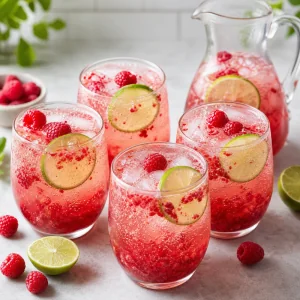
Easy Low-Sugar Homemade Kombucha with Citrus & Berries
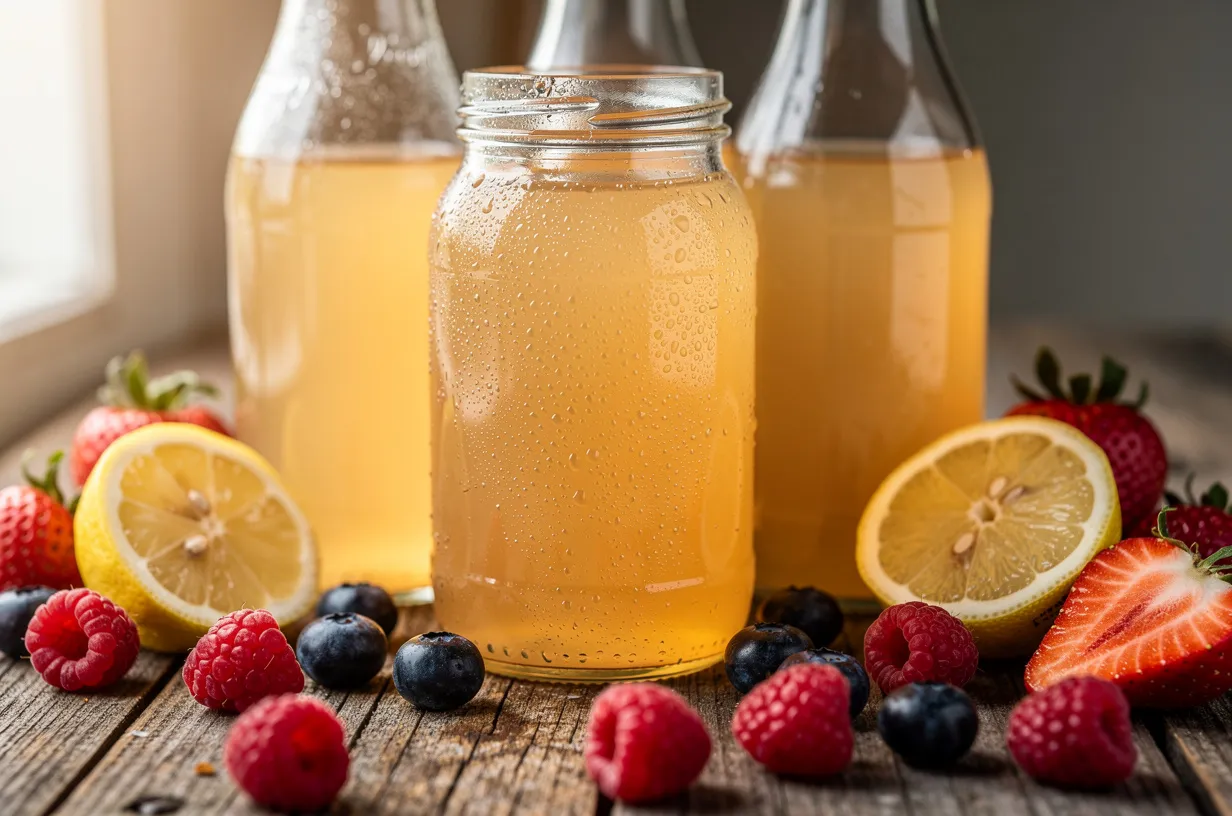

Low-Sugar Kombucha
Bright, fizzy kombucha with minimal sugar and simple fruit flavoring for a gut-friendly sip.
This is my favorite low-sugar kombucha method — bright, fizzy, and wildly approachable for first-timers. By cutting the initial sugar to 2/3 cup per gallon and relying on a slightly longer fermentation, you still feed the SCOBY enough to ferment while ending up with a much less sweet, more balanced cup. I love adding simple citrus and berry flavors in the second stage for a vibrant, refreshing finish.
I’ll walk you through the gentle steps: brewing a strong tea, cooling it safely, adding your starter and SCOBY, plus easy tips for bottling and flavoring. This recipe yields about 1 gallon (roughly 16 eight-ounce servings) and is perfect for daily sipping, sharing, or experimenting with small-batch flavors.
Nutrition (per serving)
Directions
-
1
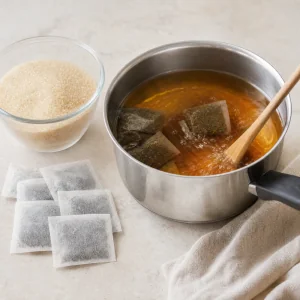
Bring 1 quart of the water to a boil. Add the tea bags and sugar, stirring until the sugar dissolves. Steep 10 minutes, then remove the tea bags.
-
2
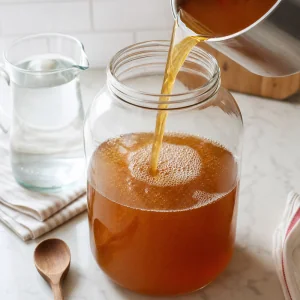
Pour the sweet tea into a clean 1-gallon glass jar and add the remaining cool filtered water to bring the temperature down. You want the tea at room temperature (around 70–80°F) before adding the SCOBY.
-
3
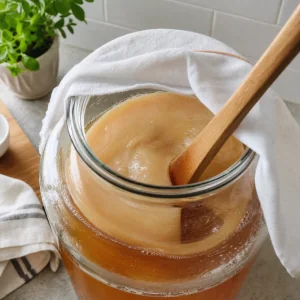
When the tea is fully cooled, stir in 2 cups of unpasteurized starter kombucha. Gently place the SCOBY on top, cover the jar with a breathable cloth or paper towel, and secure with a rubber band.
-
4
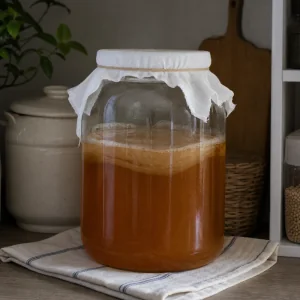
Ferment at room temperature, out of direct sunlight, for 7 days. Taste after day 5; a longer ferment will yield less residual sugar and a tangier kombucha.
-
5
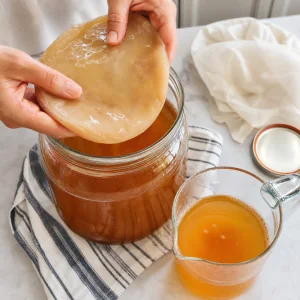
When the primary ferment tastes right to you (mildly sweet and tangy), remove the SCOBY with clean hands and reserve 2 cups of kombucha as starter for your next batch.
-
6

For secondary (flavor) fermentation, pour the kombucha into flip-top bottles, adding 1–2 tablespoons of fruit or juice per 12 oz bottle (use lemon slices and a few berries, and a thin slice of ginger if desired). Leave 1 inch headspace and seal tightly.
-
7
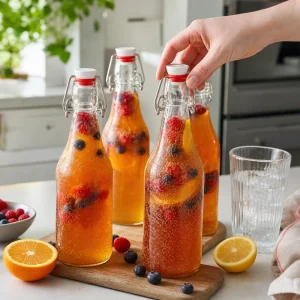
Allow bottles to carbonate at room temperature for 48 hours, checking pressure daily. When carbonation is to your liking, refrigerate to slow fermentation and enjoy chilled.
-
8

Always refrigerate opened bottles and pour gently to leave sediment behind. Save the SCOBY and reserved starter in a glass jar with some kombucha for your next brew.
Ingredients
- Filtered water:1 gallon
- Black or green tea bags:6 pieces
- Organic cane sugar:2/3 cup
- Unpasteurized starter kombucha:2 cups
- SCOBY (symbiotic culture):1 piece
- Lemon or orange slices (for flavoring):1/2 cup
- Mixed berries (strawberries, raspberries, or blueberries):1/2 cup
- Fresh ginger, thinly sliced (optional):2 tbsp
Tips & Notes
- Never add a SCOBY to hot tea — high heat will damage it. Always cool to room temperature first.
- If you want even less sugar, ferment a day or two longer in primary — the SCOBY will consume more sugar the longer it ferments.
- Use glass, wood, or food-grade plastic for brewing; avoid reactive metal. Keep everything very clean to prevent unwanted bacteria.
- To prevent over-carbonation, burp bottles once a day during secondary fermentation and refrigerate as soon as they reach your preferred fizz.